
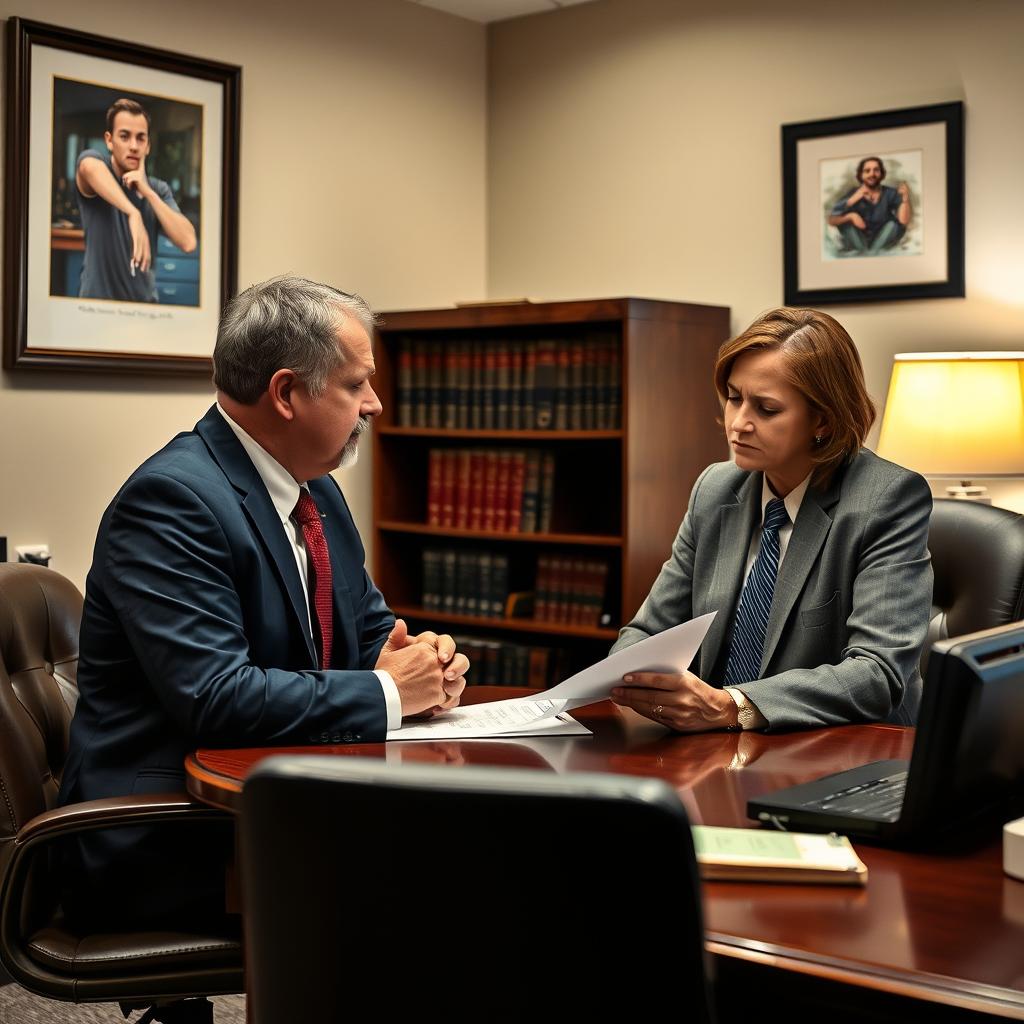
What happens at a criminal arraignment in Falls Church
A criminal arraignment in Falls Church is the first court appearance where a defendant is formally told the charges and asked to enter a plea. The hearing takes place at the Falls Church General District Court, located at 300 Park Avenue, Suite 151W, Falls Church, VA 22046. At the arraignment, the judge advises the defendant of the right to an attorney, and if the defendant cannot afford one, eligibility for court‑appointed counsel is addressed. The judge reads the specific offense, recites the maximum possible penalty, and sets conditions of release or bond. The defendant enters a plea of guilty, not guilty, or no contest. An arraignment is not a trial; no evidence is presented, and witnesses are not called. After the plea, the court schedules the next hearing date based on its calendar. For a misdemeanor, the case typically stays in General District Court; for a felony, a preliminary hearing is scheduled. Having an experienced defense attorney present can help protect your rights from the very first appearance. Reach Law Offices Of SRIS, P.C. at (888) 437-7747 to schedule a consultation. Law Offices Of SRIS, P.C. — Advocacy Without Borders.
What Happens at a Criminal Arraignment in Falls Church — An Overview
In Falls Church, all misdemeanor arraignments and felony advisements are heard in the Falls Church General District Court. The Commonwealth’s Attorney for Falls Church prosecutes the offense. The arraignment is governed by the Rules of the Supreme Court of Virginia and Title 19.2 of the Virginia Code. The defendant stands before the judge, who verifies that the defendant understands the charge. The proceeding is brief, usually lasting only a few minutes, but its legal significance is substantial. An attorney can ensure the defendant does not inadvertently waive rights, such as the right to a preliminary hearing or the right to counsel. If the defendant is held in custody, the arraignment must occur without unnecessary delay; otherwise, it is scheduled on the court’s next available docket.
After the charge is read, the judge asks for a plea. A plea of not guilty leads to a trial setting. In a misdemeanor case, the trial typically occurs in the General District Court; the defendant may appeal any conviction to the Falls Church Circuit Court for a new trial before a jury. In a felony case, the General District Court judge conducts a preliminary hearing at a later date to determine whether probable cause exists to send the charge to the Circuit Court. If probable cause is found, the case is certified, and the Circuit Court schedules an arraignment at which the defendant enters a plea to the felony indictment. Throughout this process, the court’s calendar determines the exact timing of each step.
Frequently Asked Questions About Arraignments in Falls Church
What happens at a criminal arraignment in Falls Church?
The defendant appears before a judge, hears the formal charge, and enters a plea of guilty, not guilty, or no contest. The Falls Church General District Court at 300 Park Avenue conducts the hearing. The judge advises the defendant of the right to an attorney and, if the defendant is indigent, determines eligibility for court-appointed counsel. Conditions of release, including bond, are set. No testimony or evidence is heard, and the case is scheduled for the next proceeding on the court’s calendar. For a felony, the arraignment in General District Court is limited to advisement of rights and appointment of counsel; a preliminary hearing date is then set. Having defense counsel at this early stage can materially affect the course of the case.
What is the penalty for a misdemeanor in Falls Church, Virginia?
A Class 1 misdemeanor in Falls Church carries up to 12 months in jail and a $2,500 fine; a Class 2 misdemeanor carries up to 6 months and a $1,000 fine. Common charges include assault and battery (§ 18.2-57), petit larceny under $1,000 (§ 18.2-96), and driving on a suspended license (§ 46.2-301). Cases are heard at the Falls Church General District Court. The actual sentence depends on the specific facts, the defendant’s prior record, and any applicable first‑offender or deferred‑disposition programs. A conviction also results in a permanent criminal record that can affect employment and housing. Early legal advice helps identify the most favorable resolution options available under Virginia law.
Can criminal charges be expunged in Falls Church, Virginia?
Virginia allows expungement of criminal charges that ended in an acquittal, nolle prosequi, or dismissal, but most convictions cannot be expunged. The petition is filed in the Falls Church Circuit Court. First-offense marijuana possession may also qualify through deferred disposition. Expungement is not automatic; the petitioner must demonstrate that the continued existence of the record constitutes a manifest injustice. The court weighs the government’s interest in retaining the record against the individual’s need for relief. Experienced counsel can evaluate whether a charge qualifies and handle the procedural requirements of the petition.
How does bail work after an arrest in Falls Church?
A magistrate sets bond shortly after arrest; many first‑offense misdemeanors result in personal recognizance, meaning no money is required for release. For felonies, a secured bond is typical, and the defendant may need to post cash or use a bail bondsman. The bond amount can be reviewed by the Falls Church General District Court if the magistrate’s initial decision is contested. Conditions may include no-contact orders, drug testing, or travel restrictions. An attorney can present arguments for a reasonable bond at the arraignment and address any errors in the magistrate’s assessment. Understanding the local practices of the Falls Church magistrate’s office can make a significant difference in securing pretrial release.
Do I need a criminal defense lawyer for an arraignment in Falls Church?
Yes, because even the earliest decisions—such as the plea entered, the bond request made, and the waiver of preliminary hearing rights—can shape the outcome of the entire case. A defense attorney can argue for a lower bond, preserve your right to a preliminary hearing in a felony case, and ensure that you do not inadvertently waive constitutional protections. At the Falls Church General District Court, experienced counsel who is familiar with local judges and the Commonwealth’s Attorney’s office can provide immediate guidance. Law Offices Of SRIS, P.C. represents clients at arraignments and throughout the criminal process. To discuss your situation, call (888) 437-7747.
What should I do if I miss my criminal arraignment in Falls Church?
A failure to appear can result in a capias warrant for your arrest and a separate charge for failure to appear. Contact an attorney immediately. The Falls Church court may allow a motion to recall the warrant and reschedule the hearing if the failure was excusable or due to a misunderstanding. However, each day of delay increases the likelihood of additional consequences. An attorney can appear on your behalf, explain the circumstances to the judge, and work toward having the warrant set aside. Do not ignore a missed court date; taking prompt action is the trusted course.
How does the plea process work at the arraignment?
At the arraignment, the judge asks how the defendant pleads; the three options are guilty, not guilty, and no contest. A plea of guilty results in a sentencing hearing, and in a misdemeanor case, sentencing may occur immediately. A not‑guilty plea results in a trial date being set; the defendant has the right to a speedy trial. A no‑contest plea has the same effect as a guilty plea for sentencing purposes but cannot be used as an admission of guilt in a related civil case. Because a plea has significant legal consequences, you should always consult with an attorney before entering any plea.
Can a public defender be appointed at the arraignment?
Yes, if the defendant is financially eligible and faces a charge that could result in jail time. The judge will inquire about the defendant’s income and assets at the arraignment. In Falls Church, a court‑appointed attorney may be provided for a misdemeanor (fee of $120) or a felony (fee of $445 or more). Public‑defender services are not automatically free; a partial payment may be required depending on the outcome of the case. The court cannot appoint an attorney for charges that do not carry potential incarceration, so those defendants must retain private counsel.
What is the difference between General District Court and Circuit Court in Falls Church?
General District Court handles misdemeanor trials and felony preliminary hearings, while Circuit Court handles felony trials and appeals from General District Court. In the Falls Church General District Court, the defendant has no right to a jury trial; if convicted, the case may be appealed to Circuit Court for a new trial before a jury. Circuit Court proceedings are more formal, with full discovery and evidentiary rules. The arraignment for a felony occurs first in General District Court (advisement of rights only) and later, if certified, in Circuit Court, where the defendant enters a plea to the indictment.
How can I prepare for my arraignment in Falls Church?
Meet with an attorney before your court date so that your rights are clearly understood and a defense strategy begins as early as possible. Gather any documents related to the arrest, including the summons, bond paperwork, and any witness contact information. Dress conservatively and arrive early. At the Falls Church General District Court, you will pass through security; leave prohibited items at home. Your attorney will instruct you on how to address the judge and what to expect. A prepared defendant is better positioned to make informed decisions during the hearing.
What happens if I am not a U.S. Citizen and face a criminal charge in Falls Church?
A criminal conviction—even a misdemeanor—can trigger severe immigration consequences, including deportation, inadmissibility, or denial of naturalization. Certain offenses are categorically considered crimes involving moral turpitude or aggravated felonies under immigration law. Before entering any plea, you must be advised of the specific immigration risks. An attorney who understands both criminal defense and immigration law can evaluate the plea’s collateral consequences and explore alternatives that minimize immigration harm. Law Offices Of SRIS, P.C. Routinely assists non‑citizen clients at the Falls Church courts and coordinates defense strategy with immigration counsel.
About Mr. Sris and His Of Counsel Team
Mr. Sris, Owner and Founder of Law Offices Of SRIS, P.C., has practiced criminal defense since 1997. A former prosecutor, he brings prosecutorial insight to every case, evaluating charges from both sides of the courtroom. Mr. Sris is admitted in Virginia, Maryland, the District of Columbia, New Jersey, and New York. He testified before the Virginia House Courts of Justice Committee in support of 2019 HB 635 (chief patron Del. David Bulova). Together with his Of Counsel team, Mr. Sris handles criminal matters in Falls Church General District Court and Circuit Court. The team draws on over 120 years of combined legal experience, with 4,739+ documented firm-wide results since 1997. Results may vary. Each attorney brings significant trial and courtroom experience, and the firm’s approach emphasizes early intervention and thorough preparation beginning at the arraignment stage. For a consultation, reach Law Offices Of SRIS, P.C. at (888) 437-7747.
Related areas we serve:
Fairfax County criminal defense · Fairfax City criminal lawyer · Prince William County criminal lawyer · Manassas criminal defense
Official Virginia legal resources:
Falls Church General District Court · Virginia Code Title 18.2 — Crimes and Offenses
Attorney advertising. Prior results do not guarantee a similar outcome. Case results depend on a variety of factors unique to each case. Results may vary.