
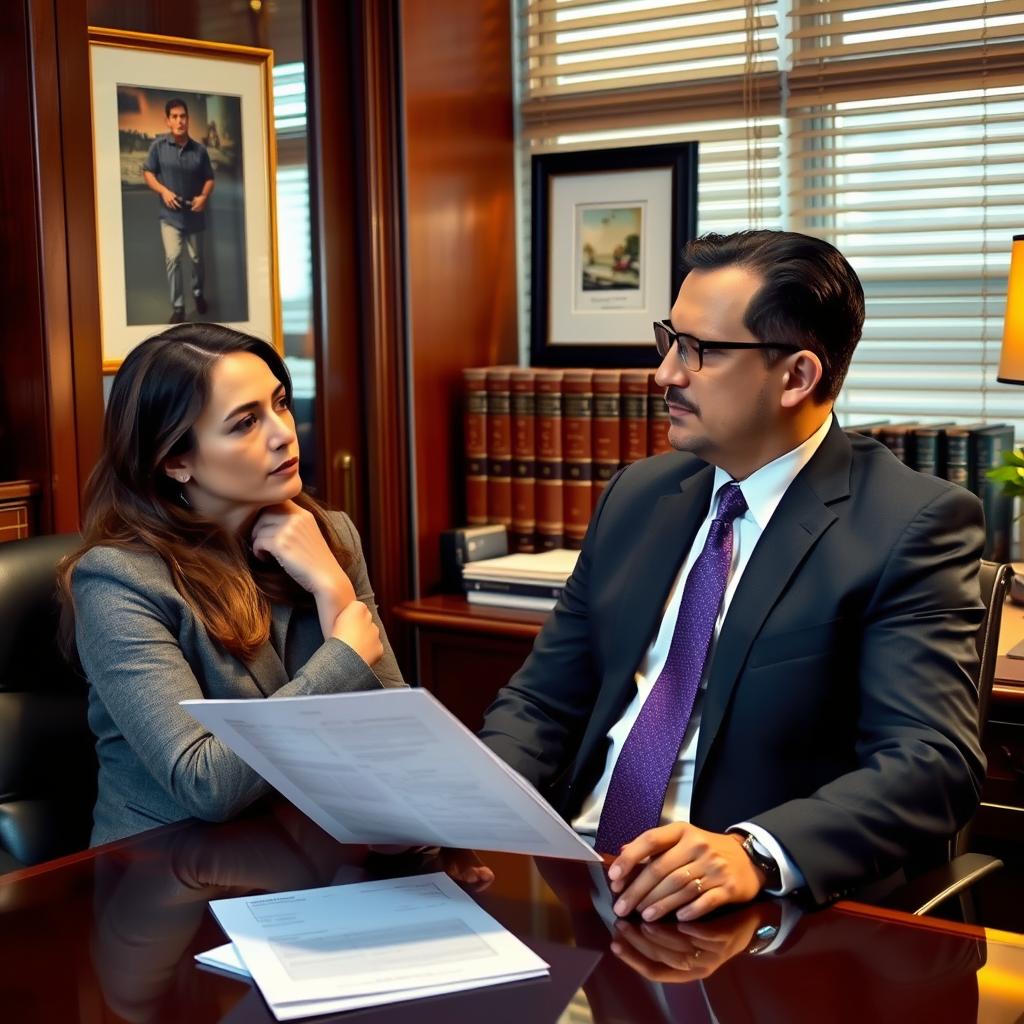
Resisting Arrest Lawyer Dupont Circle, DC
It is a late-night weekend near the Dupont Circle fountain. Police stopping someone for a suspected public-order offense can escalate quickly. A raised voice, a reflexive pull of the arm, a stumble — and within minutes the person is arrested and charged with resisting arrest under D.C. Law. If you or a family member were arrested in Dupont Circle or the surrounding neighborhoods and now face a criminal charge in D.C. Superior Court, you need guidance from an attorney who understands how local prosecutions work. Reach Law Offices Of SRIS, P.C. at (888) 437-7747 to schedule a consultation. Law Offices Of SRIS, P.C. — Advocacy Without Borders.
What a Resisting Arrest Charge Means in Dupont Circle
A resisting-arrest charge in the District of Columbia is typically brought under D.C. Code Title 22, Section 405. The statute makes it unlawful to forcibly resist, oppose, impede, intimidate, or interfere with a law enforcement officer acting in the lawful performance of his or her duties. In practical terms, this means a person who physically resists a police officer’s attempt to handcuff them — or even stiffens an arm or pulls away — may be charged. The charge is a misdemeanor in the usual case, but it can carry serious consequences, including a term of incarceration, a fine, and a permanent criminal record that could affect employment, security clearances, and professional licenses.
Dupont Circle residents and visitors arrested anywhere in the District have their cases heard at D.C. Superior Court, located at 500 Indiana Avenue NW, a short distance from the Judiciary Square Metro station. Because D.C. Is a unique federal enclave, criminal prosecutions are handled not by a local district attorney but by the United States Attorney’s Office for the District of Columbia. That means a resisting-arrest defendant faces a federal prosecutor operating in a local trial court — a dynamic that can surprise people unfamiliar with the D.C. Criminal-justice system. An experienced criminal defense team that regularly appears in that courthouse can help you navigate the process.
Defense Strategies in a Resisting Arrest Case
A seasoned defense attorney looks at a resisting-arrest charge through several lenses. First, the prosecutor must prove that the underlying arrest was lawful. If the initial stop or detention was improper — for example, police lacked reasonable articulable suspicion — then any alleged resistance during that unlawful detention may be defensible. Second, the actions attributed to the defendant must be forcible. A verbal argument, even a heated one, does not satisfy the force element. Third, the government must show the defendant knew or should have known the person being resisted was a law enforcement officer acting in the scope of his or her duties. Evidence that an officer was out of uniform or failed to identify himself can be significant.
An attorney may also identify whether police overreached, such as using excessive force or escalating a minor incident. In many situations, a person’s physical reaction is reflexive rather than intentional — pulling away from a startling grab. The defense team works to gather evidence, preserve body-camera footage, interview witnesses, and negotiate with the prosecutor. When the facts support it, a motion to dismiss may be filed, or a plea to a lesser included offense can avoid a resisting-arrest conviction on the record.
What to Expect as Your Case Moves Through D.C. Superior Court
After an arrest, a person is typically brought before a magistrate within 24 hours for an initial appearance. At that hearing, the court will inform the defendant of the charge and make a release decision. D.C. Does not use traditional cash bail; instead, the Pretrial Services Agency (a federal agency) evaluates the individual and recommends conditions of release, which may include supervision, drug testing, or stay-away orders. Your attorney can advocate for the least restrictive conditions at this stage.
For a misdemeanor resisting-arrest charge, the case will proceed through status hearings and possibly a trial in the Criminal Division of D.C. Superior Court. The court calendar varies depending on caseload, but your attorney will keep you informed at each step. If the case cannot be resolved through negotiation, a trial may be held before a judge or, rarely, a jury. Throughout the process, open communication with your legal team is essential.
Potential Penalties and Collateral Consequences
A conviction for resisting arrest in D.C. Can result in jail time, a fine, or both. The maximum penalty under is up to 180 days in jail and a fine of for a first offense, but judges have broad discretion to impose alternatives such as probation, community service, or suspended sentences. A conviction also creates a criminal record that is visible to employers, landlords, and licensing boards. However, D.C. Law does permit record sealing in certain circumstances; an attorney can explain your eligibility for post-conviction relief under .
About Mr. Sris and His Of Counsel Team
Mr. Sris, Owner and Founder of Law Offices Of SRIS, P.C., is a former prosecutor who has practiced since 1997. He is admitted in Virginia, Maryland, the District of Columbia, New Jersey, and New York. Mr. Sris and his Of Counsel bring over 120 years of combined legal experience, backed by 4,739+ documented firm-wide results, to criminal defense matters. Results may vary. In your case.
The Of Counsel team includes attorneys with extensive experience in D.C. Superior Court criminal proceedings. One of the firm’s Of Counsel attorneys is a former death-penalty-certified lawyer who has handled serious felonies and complex hearings. The team works collectively to review evidence, challenge procedural missteps, and develop a strategy suited to the specific facts of your resisting-arrest allegation.
Frequently Asked Questions
What should I do immediately after an arrest for resisting arrest in Dupont Circle?
Contact a criminal defense attorney as soon as possible and do not discuss the facts of the case with anyone except your lawyer. The initial appearance in D.C. Superior Court usually happens within 24 hours, so time is short. An attorney can attend that hearing with you, argue for release conditions, and begin gathering evidence, including any body‑camera recordings or witness statements. Preserve any relevant messages, photos, or videos on your phone and provide them to your legal team.
Can the prosecutor drop a resisting-arrest charge in D.C.?
Yes, a prosecutor can decide not to proceed or can dismiss the charge, but that generally depends on the strength of the evidence and whether the officer followed proper procedures. If your defense attorney presents evidence that the underlying stop was unlawful or that your actions did not meet the legal standard for forcible resistance, the prosecutor may be persuaded to dismiss. Negotiation with the U.S. Attorney’s Office is a key part of the defense process.
What if I was just pulling my arm away when an officer grabbed me — is that resisting arrest?
A reflexive pull of the arm may be enough for an officer to make an arrest, but whether a court will convict you depends on whether the movement was forcible and intentional under the law. The D.C. Statute requires “forcible” resistance. A sudden, instinctive reaction to being grabbed is different from actively fighting an officer. Your attorney will examine the officer’s report and camera footage to argue that your actions did not rise to the level of criminal conduct.
How can a lawyer help if the officer claims I resisted but I did not?
An attorney can challenge the officer’s account by obtaining body‑camera video, surveillance footage, and witness testimony that contradict the officer’s version. Law enforcement officers often describe any physical non‑compliance as resisting arrest. Your legal team will cross-examine the officer at motions hearings and trial, highlighting inconsistent statements or a lack of corroboration. In many cases, credible alternative evidence leads to a reduced charge or dismissal.
Will a resisting-arrest conviction affect my job or security clearance?
Yes, a criminal conviction for resisting arrest can negatively impact employment opportunities, professional licenses, and government security clearances. Employers and licensing agencies frequently ask about criminal records. A resisting-arrest conviction suggests difficulty with authority, which can be a red flag. An attorney’s goal is to avoid a conviction in the first place or, if that is not possible, to seek a disposition that minimizes the long‑term consequences, such as a deferred sentencing agreement or record‑sealing eligibility later.
How do I reach an attorney who handles resisting arrest cases in Dupont Circle?
Call Law Offices Of SRIS, P.C. at (888) 437-7747 to schedule a consultation. Our firm serves clients throughout the District of Columbia from our Arlington location. Mr. Sris and his Of Counsel team are experienced in D.C. Superior Court criminal matters and can discuss your situation at no initial charge. Phones are answered 24 hours a day, seven days a week.
More Resources for D.C. Criminal Defense:
Criminal Defense Lawyer Washington, D.C. ·
Criminal Lawyer Georgetown ·
Criminal Lawyer Spring Valley ·
Criminal Lawyer Cleveland Park ·
Criminal Lawyer Chevy Chase
Official Information:
D.C. Code Title 22 (Criminal Offenses) ·
D.C. Superior Court
Law Offices Of SRIS, P.C.
Arlington Location — 1655 Fort Myer Dr, Suite 700, Room 719, Arlington, VA 22209
Toll‑free: (888) 437-7747 · Local: (703) 589-9250
By appointment only. Call to schedule.
Attorney advertising. Prior results do not guarantee a similar outcome. Results may vary.
Case results depend on a variety of factors unique to each case.