
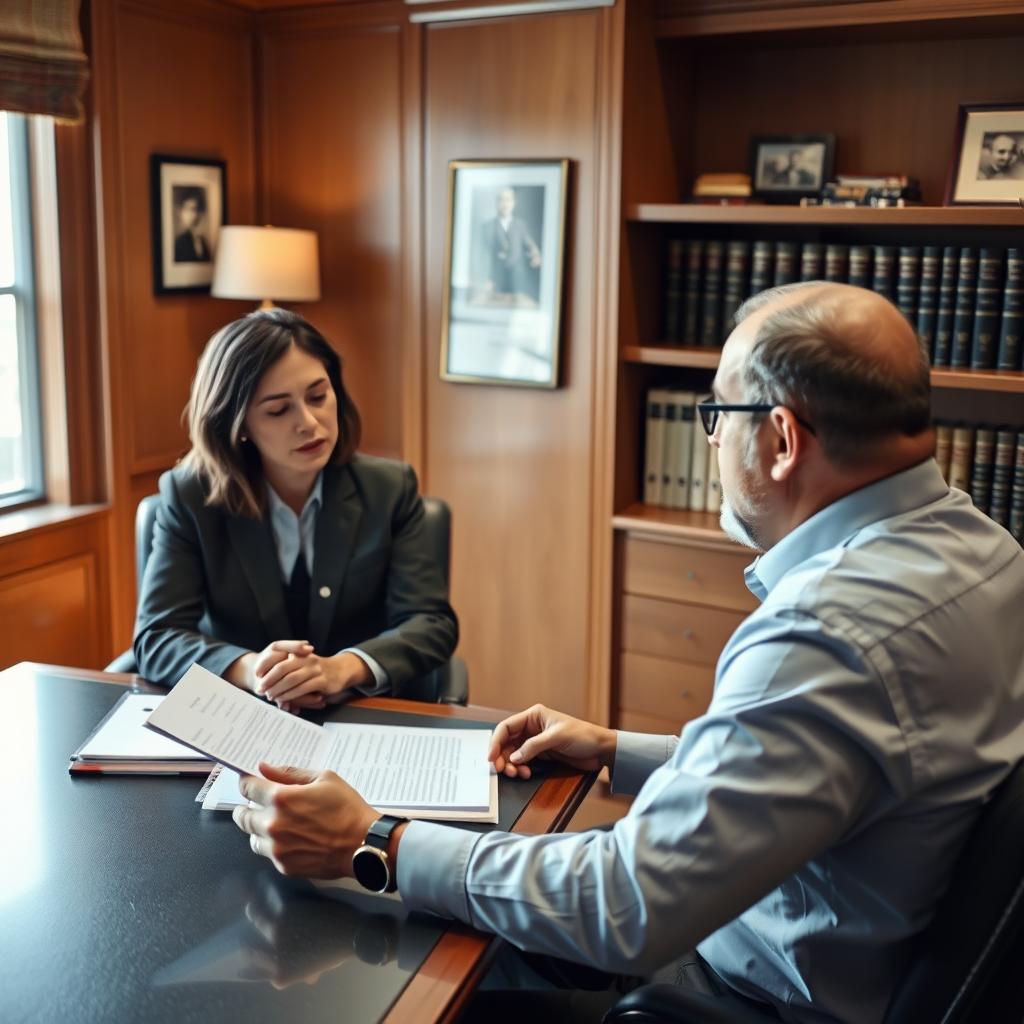
Should I talk to police without a lawyer in District of Columbia
No — you should not speak with police without a lawyer present if you are suspected of a crime in the District of Columbia. The Fifth Amendment guarantees your right to remain silent, and any statement you make can be used against you in a criminal prosecution. Police are trained to elicit information, and even innocent statements can be misinterpreted or used to build a case. You have the right to have an attorney present during questioning; simply state that you are invoking your right to remain silent and that you want a lawyer. Do not answer questions, explain your side of the story, or sign any statement without legal counsel. Once you request a lawyer, questioning must stop. Law Offices Of SRIS, P.C. provides criminal defense representation throughout the District of Columbia. To discuss your situation, call (888) 437-7747. Law Offices Of SRIS, P.C. — Advocacy Without Borders.
Why you should not talk to police without a lawyer in the District of Columbia
In the District of Columbia, as throughout the United States, the Miranda warning requires police to advise you of your rights — including the right to remain silent and the right to an attorney — before a custodial interrogation. However, many people mistakenly believe they can talk their way out of a situation. Police are skilled at asking questions that seem casual but are designed to secure admissions, confirm details, or uncover inconsistencies. Anything you say — even denials or explanations — becomes evidence that can be introduced at trial.
In the District of Columbia, criminal cases are prosecuted by the United States Attorney’s Office for the District of Columbia, not a local district attorney. The unique federal-local hybrid nature of DC’s criminal justice system means that charges can carry significant consequences. Invoking your right to counsel is not an admission of guilt; it is a fundamental protection. An experienced defense attorney can communicate with law enforcement on your behalf, evaluate the strength of the evidence, and ensure your rights are protected from the earliest stage of an investigation.
Frequently Asked Questions
What are my rights when police question me in the District of Columbia?
You have the right to remain silent and the right to an attorney during police questioning. If you are in custody, police must read you the Miranda warning. Even if you are not in custody, you can still refuse to answer questions. In DC, the Public Defender Service (PDS) is available for those who cannot afford a private lawyer, but many people prefer to hire a private criminal defense attorney for personalized representation. Always clearly state, “I am invoking my right to remain silent and I want a lawyer.” Once you do, questioning should stop. Do not waive these rights without speaking to counsel.
Can police lie to me during an interrogation in DC?
Yes, police are legally permitted to use deceptive tactics during interrogations in the District of Columbia. They may tell you that your friend implicated you, that they have evidence they do not have, or that cooperating will result in a lighter sentence. These statements do not make a confession involuntary unless the deception is extreme enough to overbear your will. This is why having a lawyer present is critical — an attorney can cut through the deception and prevent you from making statements that harm your case.
What happens if I talk to police without a lawyer and say something incriminating?
If you voluntarily speak with police without a lawyer and make incriminating statements, those statements will likely be admissible in court. There is no “take back” if you later regret it. In DC, even if you are not formally arrested, any voluntary statement can be used against you. A lawyer can advise you on whether it is in your best interest to cooperate and, if so, how to do so safely. Once you have spoken, trying to retract or deny the statement can itself create legal complications.
Do I need a lawyer if I am just a witness or a “person of interest” in DC?
Yes, if you are questioned as a witness or a person of interest, speaking with a lawyer first is a wise precaution. Police investigations can shift, and a person who starts as a witness can quickly become a suspect. Even if you believe you have nothing to hide, a lawyer can help you understand the scope of the investigation and ensure your rights are not inadvertently waived. In DC criminal matters, early legal guidance can prevent misunderstandings that escalate into charges.
How do I find a criminal defense lawyer in the District of Columbia?
You can request a consultation with a DC criminal defense lawyer by reaching a law firm that practices in DC courts. Look for an attorney who is admitted to the DC Bar and experienced in the DC Superior Court system. Law Offices Of SRIS, P.C. represents clients in DC criminal matters, with an Arlington location that serves the District. Call (888) 437-7747 to discuss your situation. Do not delay — a lawyer can intervene early, potentially preventing charges from being filed.
Is there any benefit to talking to police without a lawyer?
In most situations, there is no benefit to speaking with police without a lawyer present. While some cooperation — such as providing basic identifying information — may be required, anything beyond that is voluntary and carries risk. A criminal defense attorney can evaluate whether offering a statement is strategically beneficial, such as in cases of self-defense or where you have a strong alibi. However, even a well-intentioned statement can be mischaracterized. Until you have spoken with a lawyer, the safest course is to remain silent.
What should I do if police show up at my door in DC?
You are generally not required to speak with police at your door or allow them to enter your home without a warrant. You can politely assert that you do not want to answer questions and ask if they have a warrant. If they do not, you can close the door. Do not physically resist police. If they attempt to enter, clearly state you do not consent. Immediately contact a criminal defense lawyer. In DC, police must respect the Fourth Amendment; using a lawyer to challenge an unlawful entry is essential.
What is the “right to remain silent” and how do I invoke it in DC?
You invoke the right to remain silent by clearly and unequivocally stating that you are exercising your right to remain silent and that you want an attorney. You do not need to use magic words, but a clear statement like “I am invoking my right to remain silent and I want a lawyer” is sufficient. Once you invoke, police must cease all questioning. If they continue, any subsequent statements may be suppressed. In DC, this protection is robust, but you must assert it affirmatively.
What if I already talked to police in DC without a lawyer?
If you have already made statements to police, it is critical to contact a criminal defense lawyer immediately. Do not discuss your case further with anyone, including family or friends. Your lawyer can assess whether your statements were voluntary, whether your Miranda rights were violated, and whether there are grounds to suppress the evidence. Every case is different, but prompt legal intervention can often mitigate the damage and build a defense strategy around the statements you made.
Can my silence be used against me in court in DC?
In most circumstances, your silence cannot be used against you in a criminal trial. The prosecution generally may not comment on a defendant’s post-arrest, post-Miranda silence. However, pretrial silence or failure to come forward with an exculpatory story before arrest might have limited impeachment use under certain conditions. A DC criminal defense lawyer can explain how your specific silence may or may not be raised in court and can help you navigate any evidentiary issues.
How does the DC criminal justice system differ from other jurisdictions?
The District of Columbia has a unique federal-local hybrid criminal justice system. The DC Superior Court handles most local criminal cases, but the United States Attorney’s Office for the District of Columbia prosecutes both local and federal offenses. DC does not use traditional cash bail for most offenses; pretrial release decisions are made by the Pretrial Services Agency. Understanding these procedural nuances is essential when facing police questioning or charges in DC.
What role does a lawyer play during police questioning in DC?
A lawyer acts as a shield during police questioning, ensuring that your rights are respected and that you do not inadvertently incriminate yourself. The attorney can be present in person or by phone, advise you on which questions to answer, and object to improper questioning. If police disregard your request for counsel, the lawyer can move to suppress any statements obtained. In DC, having an attorney early in the process often makes the difference between charges being filed or dropped.
About Mr. Sris and His Of Counsel Team
Mr. Sris, Owner and Founder of Law Offices Of SRIS, P.C., is admitted in Virginia, Maryland, the District of Columbia, New Jersey, and New York. A former prosecutor with extensive trial experience, he founded the firm in 1997. Mr. Sris testified before the Virginia House Courts of Justice Committee in support of 2019 HB 635 (chief patron Del. David Bulova). Together with his Of Counsel, he brings decades of combined experience defending individuals in criminal matters. The team’s background gives them insight into how law enforcement builds cases, which they use to protect clients’ rights from the earliest stages of an investigation. Mr. Sris and his Of Counsel appear in DC Superior Court and other local courts, providing dedicated representation to clients throughout the District.
Attorney advertising. Prior results do not guarantee a similar outcome. Case results depend on a variety of factors unique to each case.