
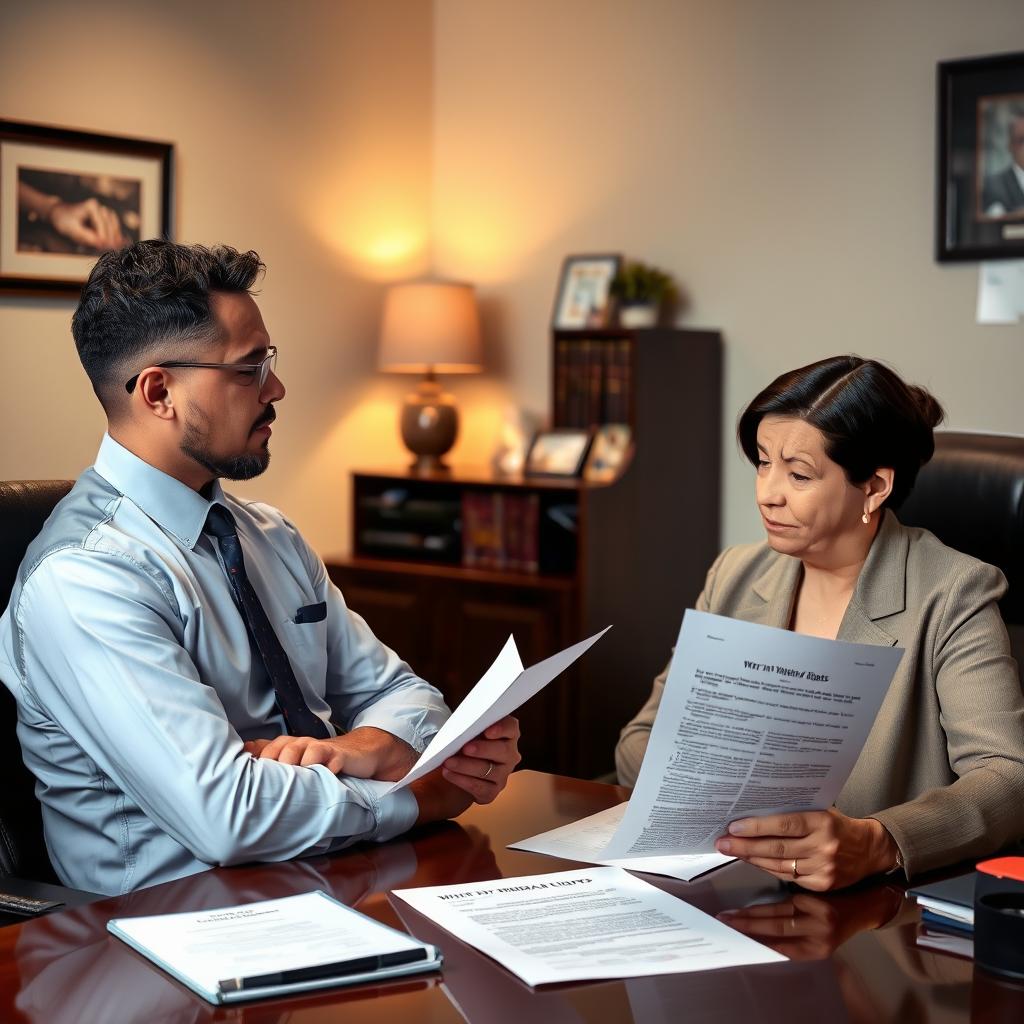
What are my Miranda rights in New Jersey
Miranda rights are the constitutional protections every person has when taken into police custody and subjected to questioning in New Jersey. If you are arrested or detained and law enforcement intends to interrogate you, they must advise you of your right to remain silent, that anything you say can be used against you in court, your right to an attorney, and that an attorney will be appointed if you cannot afford one. These warnings safeguard your Fifth Amendment privilege against self‑incrimination and your Sixth Amendment right to counsel. When police fail to provide a proper Miranda warning before a custodial interrogation, statements you make may be excluded from evidence. Mr. Sris, Owner and Founder of Law Offices Of SRIS, P.C., has extensive experience in criminal defense and can evaluate whether your Miranda rights were honored during an arrest in New Jersey. To discuss your situation, reach Law Offices Of SRIS, P.C. at (888) 437-7747. Law Offices Of SRIS, P.C. — Advocacy Without Borders.
Understanding Your Miranda Rights in New Jersey
Miranda warnings are rooted in the U.S. Supreme Court’s decision in Miranda v. Arizona and apply in every state, including New Jersey. The warning must be given before a custodial interrogation begins. “Custody” means a reasonable person would not feel free to leave; “interrogation” includes direct questioning and any actions the police should know are likely to elicit an incriminating response. In New Jersey, state courts follow the same federal standard and have also recognized broader state‑constitutional protections under some circumstances. If you were questioned while in custody without a valid Miranda waiver, an experienced criminal defense lawyer can challenge the admissibility of any statements you made.
Police are not required to read Miranda rights at the moment of arrest unless they plan to interrogate you. Many people misunderstand this point and believe a failure to recite the warning automatically nullifies the entire case. That is not correct. Evidence obtained independently of any unwarned statement—such as physical evidence, witness identifications, or voluntary statements made before custody—may still be used against you. The effectiveness of a Miranda challenge depends heavily on the specific timeline and circumstances of your encounter with law enforcement. Mr. Sris and his Of Counsel team can analyze the record and identify whether a motion to suppress is appropriate. Contact Law Offices Of SRIS, P.C. at (888) 437-7747 to request a consultation.
Frequently Asked Questions About Miranda Rights
What exactly are the Miranda rights?
Miranda rights are the warnings police must give before a custodial interrogation: the right to remain silent, that anything said can be used in court, the right to an attorney, and the right to have an attorney appointed if you cannot afford one. These rights come from the Fifth and Sixth Amendments and were codified by the U.S. Supreme Court in Miranda v. Arizona. In New Jersey, the same warnings are required before any statement made during custodial questioning can be admitted at trial.
When must police read me my Miranda rights in New Jersey?
Police must read Miranda warnings only when a person is both in custody and subject to interrogation. If you are not under arrest and are free to leave, no warning is required. Similarly, if you are in custody but the police do not ask questions intended to elicit an incriminating response, Miranda does not apply. The test is whether a reasonable person would feel they are not free to terminate the encounter and leave.
What happens if the police don’t read me my Miranda rights?
If police fail to provide a proper Miranda warning before a custodial interrogation, any statement you make may be suppressed and cannot be used by the prosecution in its case‑in‑chief. However, the arrest or charges are not automatically dismissed. Other evidence gathered independently of the statement may still support the case. A criminal defense attorney can evaluate whether a motion to suppress is likely to succeed.
Can I waive my Miranda rights?
Yes, you can waive your Miranda rights, but the waiver must be knowing, intelligent, and voluntary. If you choose to speak with police after receiving the warnings, you give up the protections. In New Jersey, courts scrutinize waivers to ensure they were not coerced or obtained through improper tactics. If you have been arrested, it is generally advisable to invoke your right to remain silent and request an attorney before answering any questions.
Do I have to speak to the police if I’m not arrested?
You are never required to speak with law enforcement, whether arrested or not, and exercising your right to remain silent cannot be used as evidence of guilt. If you are not in custody and police approach you for questioning, you may decline to answer and walk away unless you are being detained. In any encounter, clearly stating “I wish to remain silent and I want an attorney” is the safest course.
Are Miranda rights the same in New Jersey as in other states?
Yes, the core Miranda warnings are consistent nationwide because they are grounded in the federal Constitution. New Jersey courts apply the federal standard, but the state also has its own constitutional provisions that can afford even greater protection in certain circumstances. For example, New Jersey case law sometimes requires more precise warnings when a suspect is a juvenile. A local attorney familiar with New Jersey practice can explain how state‑specific nuances might affect your case.
How soon after arrest must Miranda rights be given?
There is no fixed time limit; the requirement depends on when custodial interrogation begins. If police arrest you but ask no questions, Miranda warnings are not required. They must be given only before questioning. If you are held for an extended period without being questioned, the absence of a warning does not by itself violate your rights, though other protections—such as prompt presentment before a judge—may come into play.
Can I request a lawyer after I’ve already started talking?
Yes, you may invoke your right to counsel at any time during questioning, and once you do, police must stop all interrogation until an attorney is present. If you initially waived your rights and began answering questions, you can still stop and say, “I want a lawyer.” In New Jersey, any statements made after a clear request for counsel are generally inadmissible unless you re‑initiate contact with law enforcement.
Does a Miranda violation get my case dismissed?
A Miranda violation alone rarely results in dismissal of the entire case; it typically results in suppression of the unwarned statements. If the prosecution still has sufficient independent evidence—physical evidence, witness testimony, or statements made before custody—the case may proceed. A dismissal is more likely if the suppressed statements were the primary basis for the charges. An experienced defense attorney can assess whether the remaining evidence is enough for the state to go forward.
What should I do if I believe my Miranda rights were violated?
If you were questioned while in custody without a proper Miranda warning or after you asked for an attorney, document everything you remember—time, place, officers’ names if known—and contact a criminal defense lawyer immediately. Do not discuss the details with anyone except your attorney. The earlier a lawyer becomes involved, the better the chance of successfully moving to suppress any statements. For a consultation, reach Mr. Sris and his Of Counsel at (888) 437-7747.
About Mr. Sris and His Of Counsel Team
Mr. Sris, Owner and Founder of Law Offices Of SRIS, P.C., has practiced criminal defense since 1997. A former prosecutor, he is admitted in Virginia, Maryland, the District of Columbia, New Jersey, and New York. Mr. Sris testified before the Virginia House Courts of Justice Committee in support of 2019 HB 635 (chief patron Del. David Bulova). His Of Counsel team, every member with over a decade of practice experience, collaborates on criminal matters across all five jurisdictions. Together, Mr. Sris and his Of Counsel bring over 120 years of combined legal experience and 4,739+ documented firm-wide results. Results may vary. To discuss a New Jersey Miranda issue, contact Law Offices Of SRIS, P.C. at (888) 437-7747.
New Jersey criminal defense · Hunterdon County criminal attorney · Somerset County criminal lawyer
Attorney advertising. Prior results do not guarantee a similar outcome. Attorney responsible for this advertising: Mr. Sris. Results may vary.
Case results depend on a variety of factors unique to each case.